THERE could be an easing in the unpredictable weather the region has been experiencing over the past couple of years, as the Bureau of Meteorology officially announced this week that La Nina had come to an end in the tropical Pacific.
La Nina is an irregular weather pattern that refers to a cooling of the water in the equatorial Pacific, and can impact patterns of rainfall and atmospheric pressure.
The bureau’s head of long-range forecasts Andrew Watkins said it had been observing the weakening weather system over several weeks.
“Out in the Pacific Ocean we’ve seen some changes in the sea surface temperatures, but also the temperatures beneath the surface and the trade winds, which all indicate we’re moving back into neutral conditions,” Dr Watkins said.
While La Nina may be gone for now, Dr Watkins believes there is a 50 per cent chance of it reforming later in the year, with the status of the weather changed to La Nina watch.
“About half the models that we survey suggest that we could return to La Nina in the spring,” he said.
“Back-to-back La Ninas are not uncommon, and in fact we get them about half the time since 1900.
“A three-year La Nina is less common, and we’ve only seen that three times since the middle of last century.”
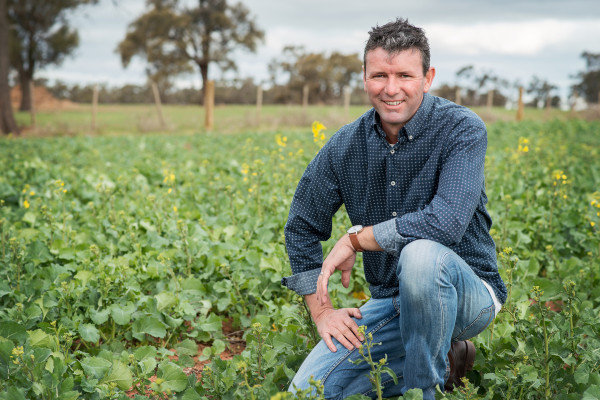
Quambatook grain grower and Grain Growers chair Brett Hosking believes this might not necessarily be a bad thing though, as Australia produced its largest-ever winter crop last year.
“Growers have seen an opportunity, so they have gone and invested in their crop – they applied nutrition and they have applied weed management techniques, so managed to store that moisture, and the result has been a record crop for Australia as a country.”
ABARES executive director Jared Greenville confirmed it had been a year for the record books.
“It’s been a boom year,” Dr Greenville said. “At the national level, farm cash income for cropping farms is estimated to have increased by around 28 per cent to average $619,000 per farm in 2021-22.
“We can put this down to higher receipts from wheat, barley, oilseeds and grain legumes.”
However, it won’t be all blue skies just yet, with the outlook still predicting wetter-than-average conditions in Australia over the coming months.
“We’ve got several other climate drivers affecting us at the moment,” Dr Watkins said.
And while the return of La Nina and the wetter-than-average conditions does pose some risk to farmers, particularly during Australia’s harvest season, Mr Hosking isn’t any more concerned than he has been any other year, with unpredictable weather just a part of the challenges of Australian farming.
“Crops are up out of the ground and looking quite good in a lot of areas,” Mr Hosking said.
“We do know that we still have a lot of perils out there that could impact our crop, but if it does turn incredibly dry up until the end of the season, we could get a late frost event, we could get a storm event such as hail, or we could get a heatwave.
“So we know that there are a lot of potential perils out there, but we push ahead in hope and pray that we are to finish off what has been a really good start.”