Home » Farming and Environment » Basin plan needed to revive Murray River

Basin plan needed to revive Murray River

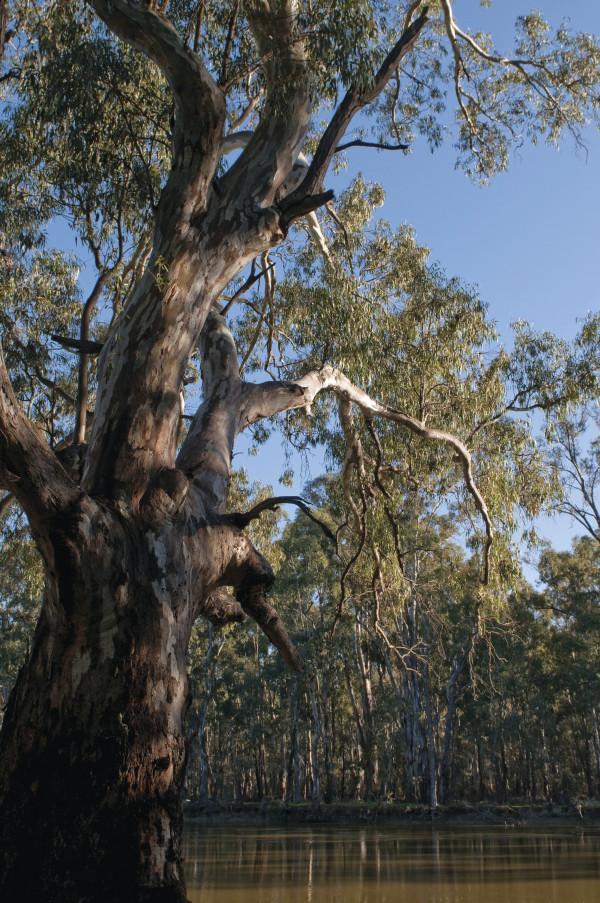
THE Murray River is “barely keeping pace” with climate change and the full implementation of the basin plan is needed to revive the river, says one environmental advocate.

Environment Victoria Healthy Rivers campaigner Tyler Rotche said climate change was decreasing rainfall and water run-off into rivers and “exacerbated” the impact on floodplain ecosystems where it was already “difficult” for water to reach.

He said current environmental flows of 2750GL were maintaining “the most basic” ecological functions and an increase in flows to the lower Murray would be equivalent to watering an area one-and-a-half times the size of Wilsons Promontory in Gippsland.

The Labor Party announced in April that it intended to return 450GL in environmental flows to meet the target 3200GL set out in the Murray Darling Basin plan if elected in May.

“Earlier analysis by the MDBA (Murray Darling Basin Authority) showed that recovering 2750GL would only achieve 57 per cent of the environmental flow targets at important indicator sites,” Mr Rotche said.

“These targets are nowhere near establishing some sort of pristine wilderness. They represent just maintaining the most basic ecological functions.”

Mr Rotche said that by letting an extra 450GL flow, 94 per cent of environmental flow indicators or targets could receive water.

“In terms of size, it’s anywhere from 45 to 80,000 hectares (that) could get water. That’s over one-and-a-half times the size of Wilsons Prom,” he said.

“(The 450GL) is often looked at in reference to South Australia because it’s the bare minimum to keep the Murray mouth open and the Coorong alive. But it’s also important for every wetland on the way.”

Local irrigators, state and federal MPs and candidates for the Mallee electorate have all spoken out in opposition to the extra environmental flows and have said buybacks could set back agricultural communities in the southern Basin.

But Mr Rotche said buybacks had “become a scapegoat” for other issues facing agriculture in the basin. He said while farmers should only participate in buybacks willingly, buybacks had been modelled as the “most efficient” way to increase environmental water flows.

“Any other means are anywhere from three to 25 times more expensive,” he said.

Although the basin plan has also outlined water efficiency measures to return water to the environment, Mr Rotche said it had not demonstrated they could keep rivers alive and often excluded family farms from benefitting from them.

“Corporate agribusinesses are 21 times more likely to receive funding from these programs than family farms,” he said. “And they take a really long time, on average about five years and up to 14 (to be completed).

“We need to be thinking about keeping water in the river so it can survive climate change and to think about bolstering funding strategically and working with people who know their communities (to ensure they) thrive into climate a drier, hotter future.”

Digital Editions


  • Raiders roll Roodogs

    Raiders roll Roodogs

    Barham-Koondrook have stormed their way into this year’s SHDCA A grade grand final after a comprehensive eight-wicket win over a disappointing Ultima-TUF on Saturday. In…

More News

  • Microburst storm responsible for damage

    Microburst storm responsible for damage

    THE Bureau of Meteorology’s Dean Narramore identified the storm which tore through Cohuna on Thursday night as a “microburst” – a highly dangerous localised weather event which is near impossible…

  • Wheels turning for Kerang club

    Wheels turning for Kerang club

    IN an effort to unite women through friendship, service, and shared values, the Inner Wheel Club of Swan Hill will host a morning tea on Thursday to gauge community interest…

  • School spirit shines through storm

    School spirit shines through storm

    DOZENS of trees at Cohuna Secondary School were snapped, torn down and wrecked during last week’s microburst storm event, including one eucalyptus tree which was ripped from its trunk and…

  • Flash floods

    Flash floods

    MULTIPLE towns across the Gannawarra Shire have reported flash flooding, caused by a torrential downpour of rain over the course of Saturday, Sunday and yesterday. The Bureau of Meteorology issued…

  • Raiders grand return

    Raiders grand return

    Redemption now beckons for Barham-Koondrook, who powered their way into this Saturday’s SHDCA A grade grand final with a ruthless thrashing of Ultima-TUF. The opportunity for redemption comes almost 12…

  • No Blues for RSL

    No Blues for RSL

    RSL will play in their first grand final in eight seasons this weekend after thrashing St Mary’s-Tyntynder by 99 runs at Gurnett Oval on Saturday afternoon. After being bowled out…

  • Council opposes glass bin mandate

    Council opposes glass bin mandate

    COUNCIL has moved a motion to join a group of nearly 40 other local government organisations, calling for a review of “metro-centric”, “one-size-fits-all” legislation which mandates kerbside collection of glass-only…

  • Clean up Kerang carries on

    Clean up Kerang carries on

    INCLEMENT weather did not deter a dedicated group of volunteers who spent Sunday morning cleaning up rubbish on the side of the Kerang-Koondrook road. As part of Clean Up Australia…

  • Cultures to collide in Kerang

    Cultures to collide in Kerang

    KERANG’S annual Lunar New Year Festival is set to return with a resplendent bang this Saturday at Atkinson Park. The festival’s first iteration last year drew a crowd of around…

  • Council finances in stable position

    Council finances in stable position

    THE Gannawarra Shire Council is in a “relatively stable” financial position, according to councillors’ assessment of the quarterly budget report at their February meeting. Council remains debt free, and as…