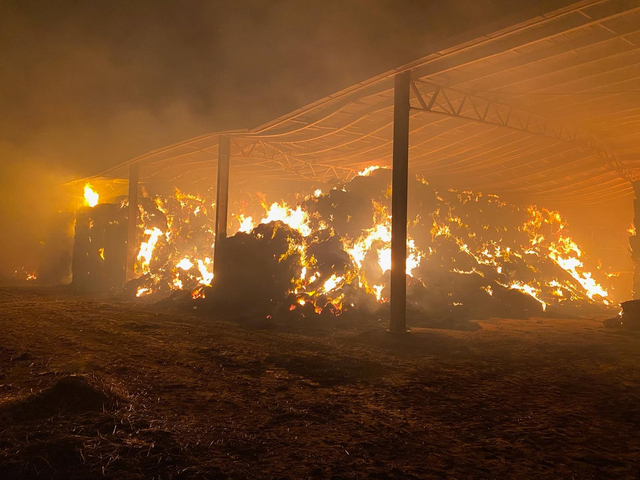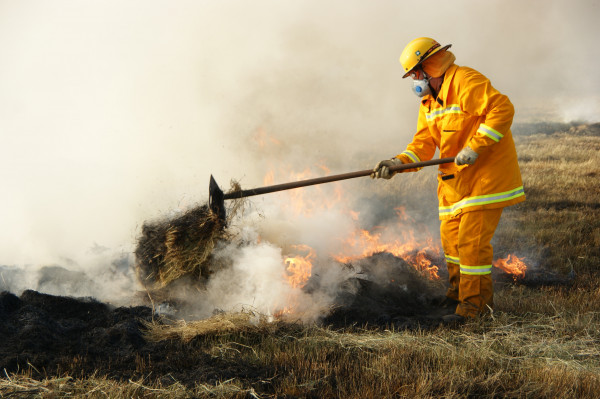
WITH hay season fast approaching, the CFA is urging farmers to exercise caution and not cut corners when it comes to baling hay.
Above-average rainfall is expected throughout the region in coming weeks, resulting in much uncertainty for the upcoming hay season, when optimum moisture content is needed for baling.
CFA District 18 acting assistant chief fire officer Gavin Wright said the prospect of a wet spring could prove to be a challenge for farmers hoping to cut hay this year.
“The hay season in the Mallee is fast approaching and it looks like we may have above-average rainfall in spring, which will put additional pressure on farmers when cutting and baling hay,” Mr Wright said.
“Unstable weather often means there are only small windows of opportunity for farmers to get their hay cut and baled right.”
Mr Wright urged farmers to wait for optimum moisture content before baling as taking risks in the forecast wet weather could lead to trouble later on.
CFA volunteer firefighters responded to dozens of haystack fires across the state last year, including 10 in the Mallee.
While haystack fires can start quite easily from lightning strikes or sparks from equipment and machinery, Mr Wright said a major source of ignition was spontaneous combustion.
This can occur when hay has either not properly dried before baling, or has been exposed to rain or damp conditions, meaning moisture content in the bales is higher than the recommended levels.
Last year a Mallee hay fire caused widespread damage when more than 1000 large bales ignited.
“It took a lot of resources to put it out and it burned for several days,” Mr Wright said, noting such fires were a burden on volunteers, who were required to monitor the area for several days.
Mr Wright said careful preparation now could help prevent bale fires and he urged farmers to take care and ensure hay was checked for potential risks, especially heat, before stacking them.
Important CFA tips:
● It is important to ensure hay is well cured before baling.
● Know the history of the hay before purchase.
● Keep haystacks to a limited size, and don’t stack hay right to the top of the hay shed. It’s important to allow air to circulate at the top as this helps carry away moisture.
● Monitor the moisture and temperature of hay regularly.
● Watch for unusual odours such as pipe tobacco, caramel, burning or musty smells.
● Store hay in separate stacks or sheds away from farm equipment and other buildings.
● Keep hay dry. Protect it from rain and cover stacks with tarps or hay caps.
Temperature guide – what to do when hay overheats:
● Use a thermometer in a probe or insert a crowbar into the middle of the stack for two hours
● Less than 50 degrees (can handle bar without discomfort): Check temperature daily.
● 50-60 degrees (can only handle crowbar for short time): Check temperature twice daily. Remove machinery from shed.
● 60-70 degrees (can touch bar only briefly): Check temperature every two to four hours. Move hay to improve air flow.
● Over 70 degrees (bar is too hot to hold): Potential for fire. Call 000 immediately. Avoid walking on top of haystack.