DISTRESSED Murray crayfish are walking out of a deoxygenated Murray River in droves as authorities race against time to save the freshwater crustaceans from death.
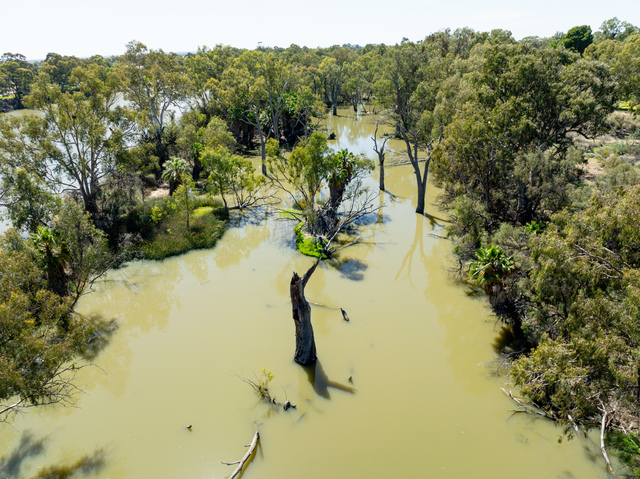
OzFish northern Victoria project manager Michelle Slater said the blackwater appeared to be a “localised” event, with deoxygenated water entering the Murray from the Loddon and Little Murray.
NSW Fisheries and an OzFish rescue team collected dozens of crayfish from the bank in Swan Hill on Thursday and Barham on Sunday.
Native fish, including Murray cod and Golden perch, have also been found dead in floodwater across the Kerang district.
OzFish is a non-government group dedicated to helping recreational fishers restore fish habitats and waterways.
The crays will be passed onto NSW Fisheries, who will transport them to holding tanks in Narrandera, NSW until the water is deemed safe and then they will be returned to the river in Swan Hill.
NSW Department of Planning and Environment director of water planning implementation Allan Raine said agencies were closely monitoring the situation.
“The scale and magnitude of this flooding on public and private property means mitigation methods to get oxygen back into the water are extremely limited,” Mr Raine said.
“Methods used in drought situations, such as artificial aerators in specific river sections, won’t be viable for combating large volume and widespread blackwater events.”
Mr Raine said dissolved oxygen levels in these areas had been steadily declining over recent weeks.
“We haven’t had any reports of large-scale fish deaths so far, which is good news, but as large amounts of organic material enter rivers from the floodplain, we know that this situation could change,” he said.
Murray-Darling Basin Authority senior director of environmental management Dr Janet Pritchard said hypoxic blackwater events occurred as leaf litter and other carbon-based debris swept into waterways.
“As this material is consumed and broken down by bacteria, oxygen can be sucked out of the water, making it difficult for fish and other aquatic animals to survive,” Dr Pritchard said.
“With the onset of warmer weather in the coming weeks, water temperatures will start to climb and the possibility of hypoxic blackwater will increase and unfortunately, we could see fish deaths like we did during the 2011 and 2016 floods.
“The high flows and widespread flooding will also add nutrients to waterways, which will favour the growth of blue-green algae with warmer conditions. As floodwaters recede back to normal levels, we will also be on the look-out for elevated salinity levels in some locations.”
Ms Slater said it was “distressing” to hear reports of fish kills and “even more so when you’re seeing it first-hand”.
“We all know how important the river is to the Swan Hill community and recreational fishing is a way of life for many people,” she said.
“Seeing large Murray cod and Golden perch floating and Murray crays walking from the water is just heartbreaking.”
Ms Slater said it wasn’t surprising a blackwater event would happen given the magnitude of the flood.
“Blackwater events have always occurred, but significant changes to the function of our rivers due to regulation and changed flow means larger quantities of organic matter are washing into our rivers,” she said.
The public was urged to leave ant crayfish where they find them.
“Don’t pick them up or interact with them, as they’re already distressed,” Ms Slater said.
“And most importantly, please don’t remove them. I know it’s upsetting to see them out of the water, but OzFish has fish emergency recovery teams currently working to rescue as many crays as possible and move them to holding tanks.”
Ms Slater said Murray crayfish were one of the native species vulnerable to hypoxic blackwater events.
“Essentially, there isn’t enough dissolved oxygen in the water for them to survive and so they exit onto the riverbank or climb onto trees and logs to escape,” she said.
“They’ll stay there until the blackwater event passes and return to the river if they survive, but sadly the majority of them don’t make it.
“The main concern is predation from terrestrial species, they become easy pickings when they’re exposed, and illegal harvesting.”
The ongoing impact on crayfish populations was also a concern for authorities in the mid-Murray.
“Murray crayfish are very slow growing and can take up to nine years to reach breeding maturity, so the loss of any juveniles is going to reduce the future breeding potential, and this is also the time of year when crayfish eggs begin to hatch,” Ms Slater said.
“A mature female crayfish will carry her eggs underneath her tail and continue to carry the dependent juvenile crayfish for several weeks to months after hatching.
“It has taken over a decade for us to start seeing a recovery in the Murray crayfish population in our area and it’s very likely that this event will set the population back again.”