
A GROUP of district indigenous people have provided an intriguing insight into their traditional life in the Gunbower Forest.
There is cultural evidence that the people of the Barapa Barapa nation have resided in the district for more than 3000 years.
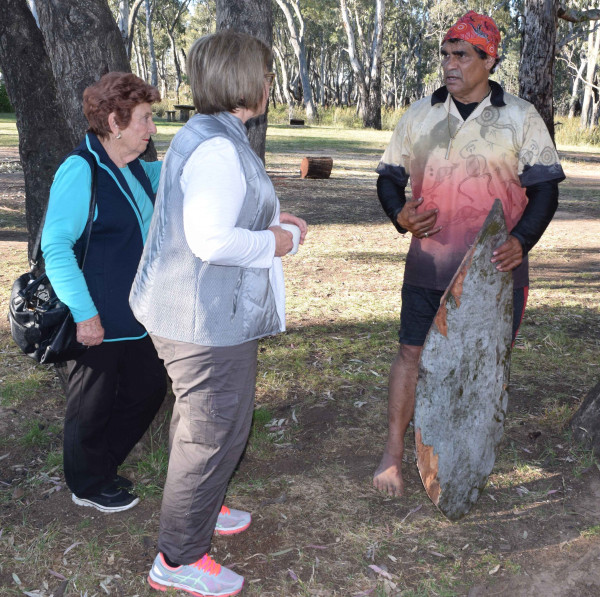
The cultural event last attracted more than 30 people to the Tree Tops Scout Camp for a cultural session with the Barapa Culture Team and Kerang Local Aboriginal Network, with support from Friends of Tree Tops.
It was an opportunity for residents to hear from traditional owners and experts about Barapa life in the forest, and also learn about the Barapa Water for Country Project.
The two-year project has aimed to integrate cultural values into the management of environmental watering in the forest.
The night began with a welcome to country and smoking ceremony by Barapa Elder Uncle Ron Galway.
“This has been the heartland of Barapa country for thousands of years,” he said.
“Whenever we can we try to get back to where we came from and look after what we’ve got for future generations.”
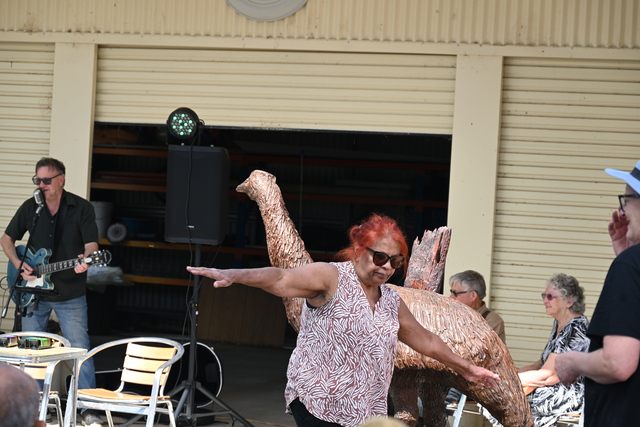
The ceremony included Barapa cultural dances performed by Barapa Culture Team members Dion and Daniel Patten.
The event also featured presentations from Barapa Water for Country experts, archaeologist Colin Pardoe and ecologist Damien Cook, who led a walk through the forest.
Mr Cook spoke about some of the abundant flora in the forest and its many uses as a food source and building material.
Dr Pardoe talked about Aboriginal cooking mounds and how they can be studied to understand traditional life and population distribution and trends.
While he is currently undertaking mapping of mounds in the Gunbower Forest, he spoke about a completed project at Pollack Swamp, near Barbers Creek in the Koondrook-Perricoota Forest.
Studies of the swamp showed heavy concentrations of cooking mounds belonging to Barapa people, dated at between 3000 and 3300 years old.
Dr Pardoe said 154 mounds were recorded, mainly in village-like clusters around ponds, which were enlarged across the centuries by the removal of clay for the cooking mounds.
“Every one of the mounds helps pull together the traditional basis of life in this area,” he said.
“This is not wandering aimlessly like we often see in depictions of hunter-gatherers; these are people who are settled for four to five months of the year.
“We should pay a lot more attention to Barapa traditional residency as a measure of the ecology.”
Dr Pardoe said much of what had been discovered remained open to interpretation, with endless questions but few definitive answers, so more investigation and analysis was needed.